I actually do not like controversy.
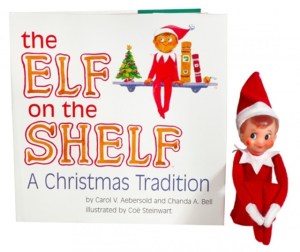 I am a stereotypical, peace-keeping middle-child. That being said, I think I’m about to jump into a larger mess than I did with my blog about jolly ol’ St. Nick. That’s right…for better or for worse…let’s talk about the elf on the shelf.
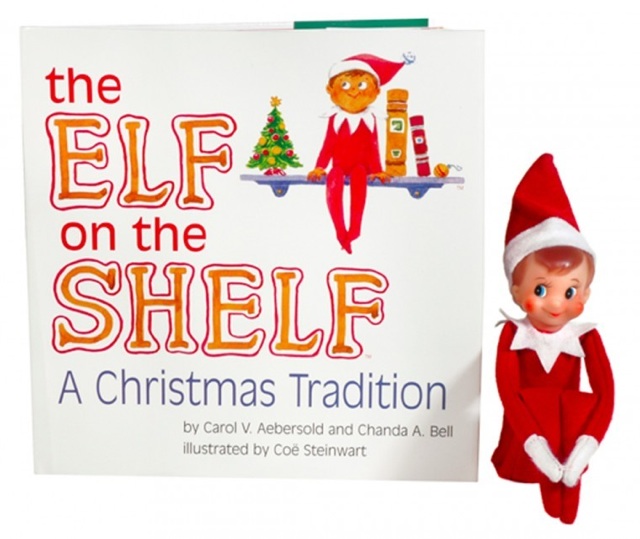
Now, if you have somehow managed to go through the last several years of Christmases without hearing about this rapidly spreading tradition…then here is a brief history lesson of the shelf dwelling elf. Apparently, various forms of the elf on the shelf have existed for quite some time, but the modern craze began in 2004 with the writing of a short story by Carol Aebersold and her daughter Chanda Bel.
The story was published in 2005 and explains how Santa keeps track of who is naughty and who is nice via a personalized elf on the shelf for participating families. Once you have acquired your elf, you name it and then he or she will show up at your house each day to keep watch over you until Christmas Eve. Every night, the elf flies to the North Pole to report to Santa your daily behavior. Thus, every morning you will know the elf left your home and returned due to the fact that he/she will be in a new location. Now…no kids are allowed to touch the elf as this will cause him/her to lose his/her Christmas magic.
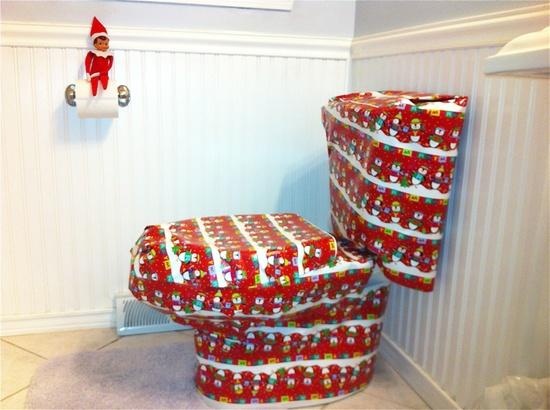
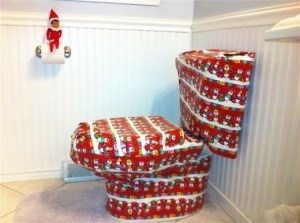 This short summary describes the manner in which the elf of the shelf is intended to be used. From experience, I know many families use their elves in completely different ways. For instance, there are some for whom the elf is simply a fun mischief maker who pulls daily pranks throughout the holiday season. However, individual family uses of the elf are not necessarily what concerns me…no. My apprehensions surrounding the Christmas Keebler is rooted in its original intent as described by the book…many of you already know what I’m going to say.
The primary issue I have with the elf on the shelf is that it’s central purpose stands in contradiction to the heart of Christmas…the gospel. The elf records your deeds to see if you measure up and deserve presents on Christmas day. But, the true present of Christmas is “good tidings of great joy that will be for ALL PEOPLE” regardless of whether they are “good” or “bad.” That good news is that “a Savior is born who is Christ the Lord!”
Christmas is a day for celebrating grace! It is a day for celebrating God giving himself to us all…freely! It is not a day for earning, meriting, or deserving. No. On the contrary, it is a day for our “deserving” to die and our “undeserving” to be declared as good news…because the undeserving are specifically the people to whom Jesus has been given! None of us deserve Jesus! None of us deserve grace! If we did…it wouldn’t be grace! Meriting something at Christmas does not make the day more magical…it actually steals all of its magic, because the magic of Christmas is grace! Nothing is more wonder producing than gospel grace!
The elf on the shelf does not bring good news…rather, he/she brings bad news that your reward depends on your ability to be good.
 I tend to think the pharisees would have been big fans of the elf on the shelf. I think they tried to promote “the law on the shelf.” Jesus had news for them, namely, that no one can fulfill all the law except him…so he has done it for us. Likewise, I think Jesus would have similar news for the elf, namely, ol’ shelf-boy/girl can watch him for a record obedience…then apply it to our account! That is the only way we will receive the true reward/gift of Christmas…true life, now and forever, through Christ!
Now…before everybody freaks out and thinks I’m trying to tear apart all fun and magical Christmas traditions everywhere…I’m not! Not at all! I simply think the most magical celebration of Christmas is gospel grace, not merit-based rewards. The former is better (more magical) news than the latter. I actually think you can still use the elf if you want, but do so in a way that highlights grace, love, and mercy instead of judgment, merit, and condemnation.
Whether we are talking about the elf on the shelf or any other Christmas tradition, here are three crucial questions I think will help us shape Christmas around the very thing that created it…grace.
1. What are we saying?
Everything communicates. We all know that communication goes beyond our words and extends to our actions. This brings to mind the often quoted saying, “Actions speak louder than words.” In many cases, this saying is true, and we must remember that our Christmas traditions communicate something about Christmas and Jesus.
 We cannot simply use our words to say that Christmas is about Jesus and the gospel while allowing our actions to undercut that message. The things that speak the loudest are not actions or words, but words that are married to action. As we examine our Christmas traditions, we need to ask what these things are communicating, and is it a message that is in line with the gospel?
2. Why are we saying it?
If our traditions do not support the gospel, or worse, undercut the gospel…then we must ask why we are communicating these things at all? Is it worth the time and effort? Is it worth the risk of ingraining a false message within our kiddos.
I have had people become really angry with me as we have discussed Christmas traditions such as Santa Claus and elf on the shelf. Typically, during the conversation, I ask them why doing these things is so important to them. Some of them have answers, but many cannot explain why they do what they do…or why they even want to do it.
I am not saying that we need to abandon our traditions, but we need to be willing to examine them and ask “why?” Even if you choose to do things such as elf on the shelf, you need to know why and make it a good reason why…a grace centered reason why.
3. Can we and should we say it differently?
Whether we are talking about the elf on the shelf, Santa, or whatever…can we use these things to speak the true message of Christmas? Can the elf become a pointer to grace…a pointer to Jesus…a pointer to the gospel?
 I want to encourage myself and all of us to think deeply about our traditions and keep what should be kept, leave behind what should be left behind, and change what should be changed.
None of our traditions are more important than the gospel. If we can use the elf to highlight the gospel, then let’s go for it. If not…then perhaps we really should put him/her on the shelf…permanently.



 The Joy of Glory